Nous contacter
Consult with Professionals
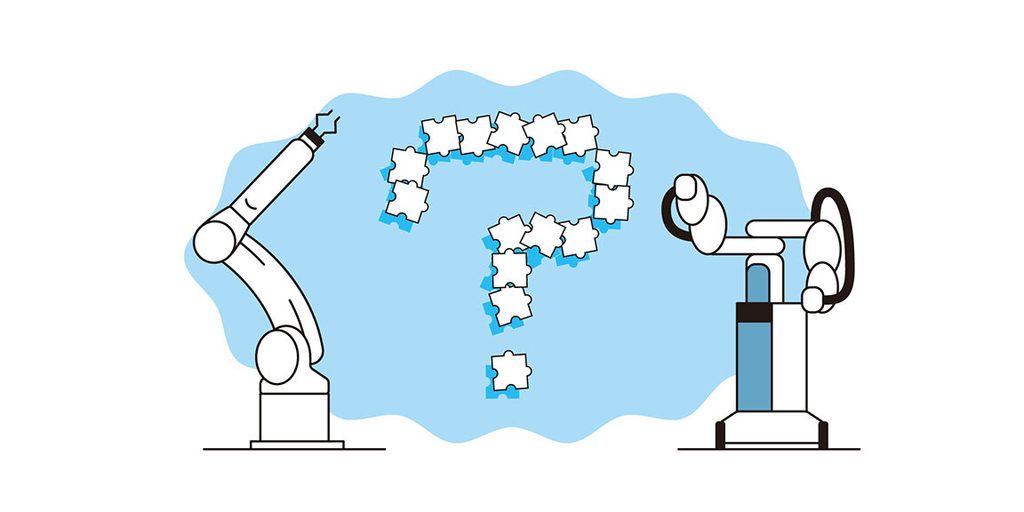
You’re starting at square one: No robots have been introduced yet. You are interested in automation, but not sure which tasks to automate. In the beginning, it can be difficult to judge whether a particular task can, or should, be automated or not. In this situation, there are resources to give you peace of mind when introducing a new robot system. In many cases, a specialized engineering firm called Robotic System Integrator (robot SIer) is responsible for planning, designing, and deploying robotic systems. In general, the SIer interacts between the user and the robot manufacturer, acting as a connection between them, and leads the way to the system installation. Kawasaki is a valuable robot maker that can even play the role of a robot system integrator.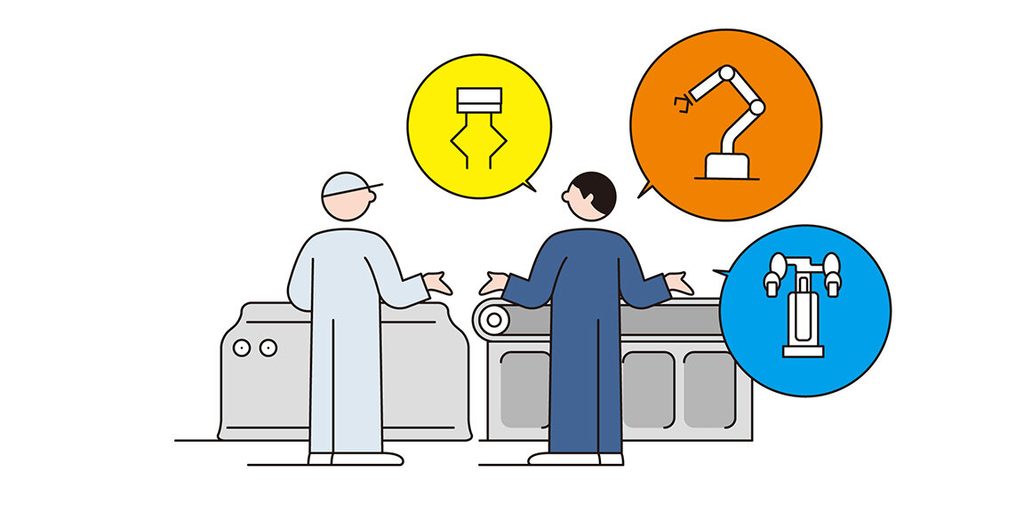
Create a robot-conducive environment
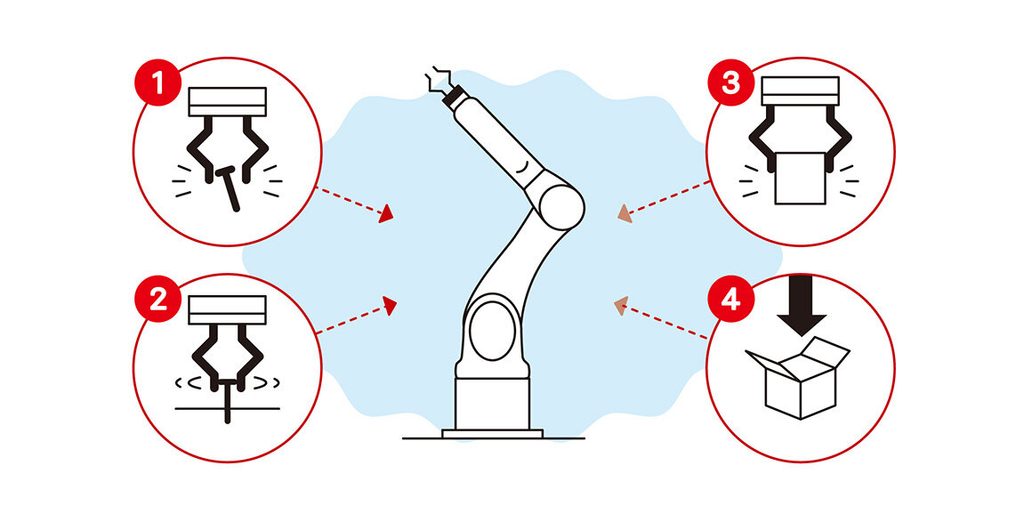
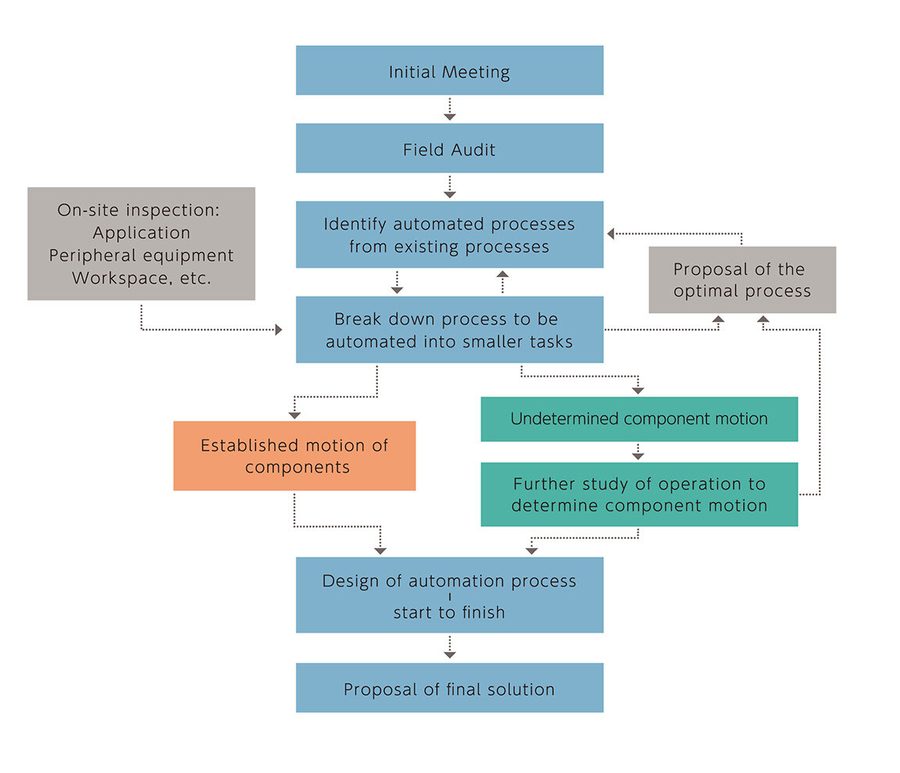
Next, you need to understand whether or not automation should be used. Robots are better at some tasks than others. For example, it is easy to accomplish repetitive tasks that require high degrees of accuracy, or dull, dirty, and dangerous jobs that aren’t ideal for humans to execute. But when it comes to complex applications requiring human senses such as sight, delicate touch, smell, and taste, extra equipment and sensors may be required, which can make a system more complicated and expensive. It is important to consider whether a robot is really suitable for the process you’re thinking of automating and whether a robot can demonstrate its power, productivity, and cost-effectiveness. Even in the common case of partial improvement of production processes, the first step is to sort out the tasks that should be performed by humans and the processes that should be performed by robots, taking into account the above viewpoints.After narrowing down the processes to be automated by the robot, work elements are disassembled in a way that makes sense for the robot. For example, a person might think of a task the following way: Remove the screw and place it on the product on the jig. When you finish tightening, put the finished product in the next box. But in the case of a robot, it is necessary to subdivide each task:
Step 1: Remove the screw
Step 2: Place the product on the jig
Step 3: Place screw in the designated location
Step 4: Tighten screw
Step 5: Pick the finished product
Step 6: Place finished product in box
At the same time, it is essential to create an environment in which robots can operate.
For example, if there is no storage space for equipment needed before and after the automated process, there is no problem in the operating space of the robot itself, but the process could be delayed. It is very important to design while imagining not only an automated process but also keeping in mind a realistic process flow such as whether this equipment is smoothly linked to the tasks that come before and directly follow that process. This requires a macroscopic perspective with a bird’s-eye view of how to smoothly pass complex elements such as workers, robots, parts, products, space, and time from upstream to downstream.
Follow Up After Install
Once the details of the system are established from start to finish, a risk assessment is conducted based on the basic design. Once the safety of the robot is confirmed, it goes into the manufacturing and programming of the robot system. After the design drawing of the entire robot system is completed, it goes through manufacturing, testing, delivery, and installation, and then proceeds to the phase of production operation. But even with a successful deployment, the job of a robot manufacturer or system integrator isn’t over. The company has a long relationship with the end-users that use the system, including regular inspections, customer support, and assistance if failures occur. Kawasaki Heavy Industries has a dedicated call center to answer any questions end users have after installation. There is also a 24-hour help desk for problems that arise outside of business hours. Another reason for Kawasaki’s popularity among users is its extensive follow-up and customer service. Kawasaki Heavy Industries’ after-sales service team was established more than 30 years ago. And in 1986, it established Kawasaki Robot Service Co., Ltd. (formerly Kawasaki Robotics, Ltd.), a company specializing in maintenance and after-sales service. Behind the Kawasaki robots, there is always a team of experts close to the robot’s life, from installation to operation, maintenance, and renewal.
[Columns]
Introducing Industrial Robots Faster!
Start of K-AddOn operation
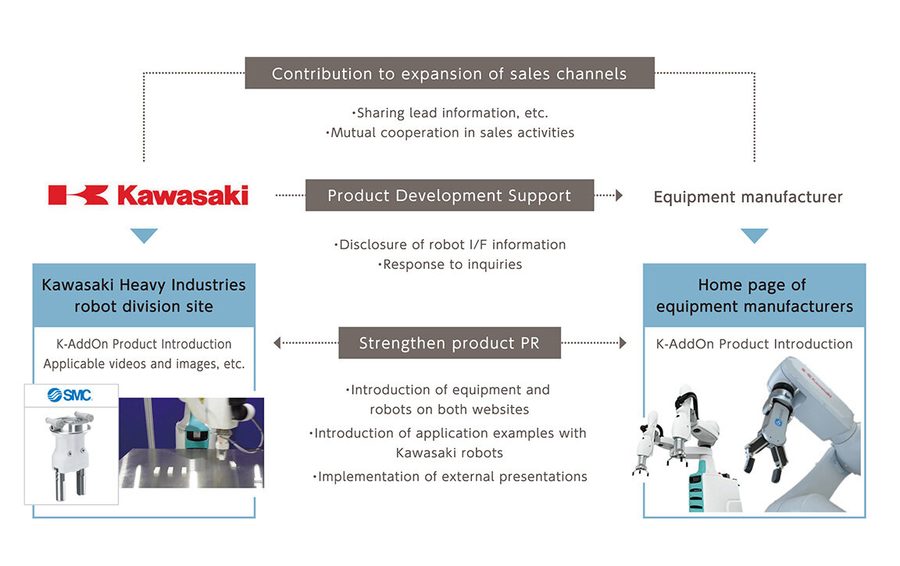
Industrial robots cannot work by themselves. They need to connect to peripheral equipment such as grippers and vision systems so the whole system can work. In order to smoothly connect devices made by the various manufacturers, it is necessary to connect and link the respective software types. The K-AddOn platform was launched by Kawasaki to speed up the time it takes to connect the robot to its peripheral equipment and help ensure a smooth deployment. By opening the interface of industrial and collaborative robots made by Kawasaki Heavy Industries to peripheral equipment manufacturers, the robot system integrator and end-user can reduce the verification cost of equipment connection required at the time of installation.